
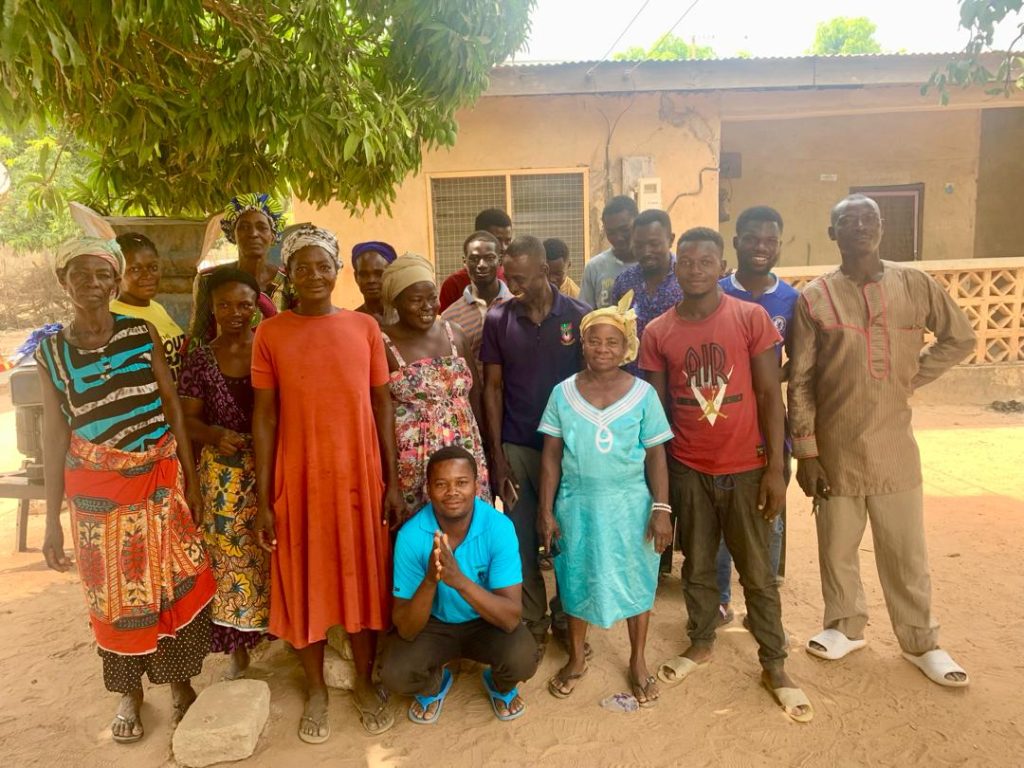
In the face of extreme climatic conditions that severely impact agricultural production in the Upper West Region of Ghana, MAGVIN Research Institute took proactive steps to engage with farmers in Kaleo. The focus of the engagement was to ascertain the CSA practices employed by farmers, the challenges in the utilization of CSA practices and how the institute can support farmers improve on the strategies adopted to enhance agricultural productivity and contribute to food security. Through extensive on-farm interactions and group discussions with farmers, the team from the institute has gained valuable insights into the various CSA practices employed by farmers (especially indigenous climate-smart strategies) and the challenges confronting farmers in adopting CSA practices. Mixed cropping, changing planting dates, application of inorganic fertilizer, small-scale irrigation systems, mulching and crop rotation were among the CSA practices adopted by farmers in Kaleo.
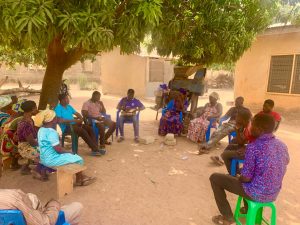
To enhance farmers’ knowledge and skills and ensure better agriculture production, the team from MAGVIN Research Institute conducted a series of sensitization exercises and demonstration plots to enhance the knowledge of farmers on CSA practices adopted. From soil conservation techniques to water-efficient irrigation methods, farmers are discovering practical strategies to optimize resource use and mitigate environmental risks. By embracing practices such as agroforestry, crop rotation, and integrated pest management, farmers are improving soil health, enhancing biodiversity, and sustainably boosting crop yields. Nevertheless, farmers stated that limited access to credit, expensive farm inputs such as improved seeds and drought-resistant crops, and limited extension services negatively affect their ability to adopt and effectively implement CSA practices.
However, the MAGVIN Research Institute acknowledges that the journey towards climate-smart agriculture requires concerted efforts and collaboration from all stakeholders. As such, the institute is calling on all stakeholders and partners from the government, academia, civil society, and the private sector to join hands to support farmers in supporting the training and capacity-building efforts of Kaleo farmers. By leveraging the collective expertise, resources, and networks of diverse partners, the institute aims to scale up its educational initiatives and ensure widespread adoption of climate-smart agricultural practices among farmers in Kaleo and beyond. Through collaborative action and shared commitment, we can empower farmers to overcome challenges, build resilience, and secure a prosperous future for agricultural communities worldwide.