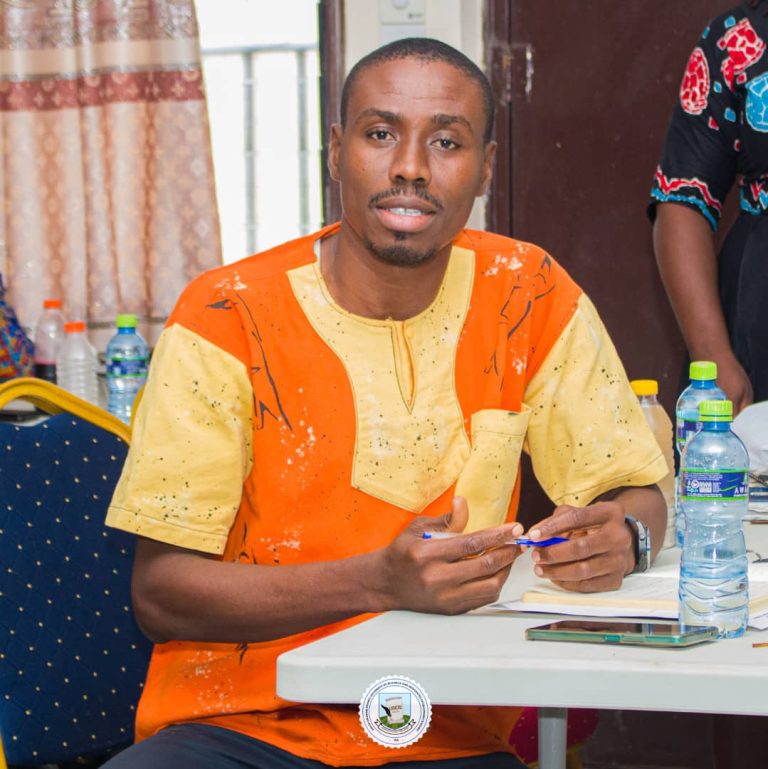
Mr. Linus Mwinkaar is a committed Academic, Educationist, Teacher Educator, and Researcher at the Simon Diedong Dombo University of Business and Integrated Development Studies (SDD-UBIDS), Wa, Ghana, where he serves as a Lecturer in the Department of Educational Foundations under the School of Education and Life-Long Learning (SoELL). With a strong focus on Teacher Education, Curriculum Development, Inclusive Education, and Educational Technology, he plays a critical role in shaping future educators and promoting inclusive and innovative teaching practices.
Mr. Mwinkaar’s research interests span Curriculum and Pedagogy in Basic Education, Inclusive Education, Differentiation in Teaching and Learning, Educational Technology, and Teacher Education. His dedication to advancing educational standards is reflected in his active participation in numerous capacity-building programs, including workshops on standards-based education, quantitative and qualitative research methods, referencing skills, and integrating Artificial Intelligence in academic research.
Beyond academia, Mr. Mwinkaar is deeply engaged in institutional and community development. He has served on key committees at SDD-UBIDS, including the Research and Development Conference Planning Committee and the Teaching Practice and Professional Development Committee, where he contributes to enhancing research culture and teaching effectiveness. His civic engagement includes serving as an election observer with the Coalition of Domestic Election Observers (CODEO) during the December 2024 general elections, underscoring his commitment to democratic governance and civic responsibility.
Mr. Mwinkaar’s extensive experience in educational research, academic leadership, and community service brings valuable insight and expertise to the board of MAGVIN Research Institute. His work aligns with the Institute’s mission of advancing inclusive development through research, innovation, and education, particularly in marginalized and underserved communities. Through his multi-faceted contributions, he strengthens the Institute’s capacity to influence policy, improve educational outcomes, and foster social change across Ghana and beyond.